Trip Advisor Award
Skip to content
The granite gateway to Zhagana, with the valley road running through it

Gannan, Little Tibet: Labrang, Langmusi & Zhagana

Eight days through Tibetan Gansu — cliff caves, prayer wheels, yellow monastery walls and the stone town of Zhagana.

  1. Big city

    Lanzhou

    Day 1

  2. Cliff caves

    Binglingsi

    Day 2

  3. Labrang Monastery

    Xiahe

    Day 2 – 3

  4. Yellow walls

    Langmusi

    Day 4

  5. The stone town

    Zhagana

    Day 4 – 6

  6. River bends

    Zoige & Aba

    Day 5 – 7

Gannan is the Tibetan edge of Gansu: a high country of monasteries, pastures and limestone towers that the Chinese travel press likes to call Little Tibet. It is also one of the few places where you can photograph a working monastic town in the morning and a grass valley full of yaks in the afternoon.

Eight days, starting and finishing in Lanzhou. Two monasteries — Labrang and Langmusi — the cliff caves at Binglingsi, the stone village of Zhagana, and the first bend of the Yellow River out on the Zoige grassland. The road stays between 2,000 and 3,000 metres, the walking is short, and the light is the reason to be there.

Inquiry Now Mercier Zeng will reply to you directly within a few hours.

Itinerary

Day 1Arrival in Lanzhou

Lanzhou sits on the Yellow River at the eastern edge of the plateau, and every road into Gannan starts here. We meet you at the airport or the railway station and take you to the hotel.

In the evening, a bowl of hand-pulled beef noodles — the dish this city is known for — and a first look at the week ahead with your guide.

If you land early, the Gansu Provincial Museum keeps the bronze Flying Horse, and the riverbank below the Zhongshan Bridge is busy and photogenic at dusk.

  • Airport or station pick-up
  • Welcome dinner
  • Beef noodles

Overnight Lanzhou

The bronze Flying Horse of Gansu, in the Gansu Provincial Museum

Day 2Binglingsi Grottoes – Xiahe

We leave the city heading west, following the Yellow River to Liujiaxia, then on to Binglingsi — a wall of caves cut into a cliff above the water, part of the Silk Road World Heritage listing.

The great seated Buddha here is twenty-seven metres of clay and stone, with wooden stairways and galleries pinned to the rock around it. It is one of the oldest cave sites in China and one of the quietest.

By late afternoon we climb onto the plateau to Xiahe, where the air is thinner and the light is already different.

  • Binglingsi Grottoes
  • The cliff Buddha
  • Onto the plateau

Overnight Xiahe

The great seated Buddha carved into the cliff at Binglingsi, with walkways either side

Day 3Labrang Monastery & Ganjia

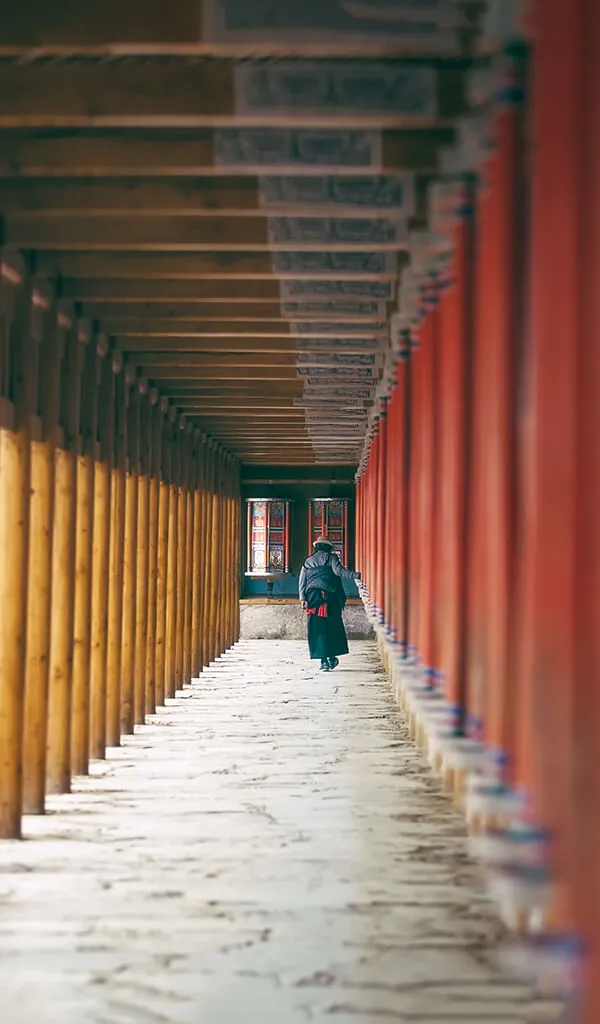
Labrang is the largest Tibetan monastery outside Tibet, and the morning belongs to it. The kora — the covered corridor of prayer wheels — runs for more than three kilometres around the perimeter, and pilgrims walk it clockwise, setting each wheel turning with the flat of the hand.

We work the corridor in the early light, then climb the hill behind the town for the rooftops, the golden spires and the whole monastery laid out below the mountain.

In the afternoon, the Ganjia valley: a hidden basin with a 1,300-metre drop, where cliffs, lakes and grassland fold into one another. Then the drive to Langmusi, with the last light on the pastures and the herds going home.

  • The kora at Labrang
  • Rooftops from the hill
  • Ganjia valley

Overnight Langmusi

A pilgrim turning the prayer wheels along the covered corridor at Labrang

Day 4Langmusi & Zhagana

Langmusi sits in a narrow valley where Gansu meets Sichuan, two monasteries facing each other across a stream. Early morning is the time: white stupas, the long yellow walls, and pilgrims walking the circuit before the town wakes.

In the afternoon, Zhagana — the stone town — a village of Tibetan houses stacked on a slope beneath a crown of limestone towers.

Fields, wood smoke, carved gates, and the rock turning gold at the end of the day. We stay inside the valley, so the morning needs no drive.

  • Langmusi at dawn
  • The yellow walls
  • Zhagana stone town

Overnight Zhagana

A monk in red walking past the long yellow wall of a monastery at Langmusi

Day 5Zhagana Sunrise – Zoige Grassland

Up before light for the sunrise over Zhagana, when cloud sits in the valley and the houses come out of it one at a time.

Then east across the Zoige basin to Huahu, a lake in the middle of the grassland where the light moves over the water and the herds drift past the far shore.

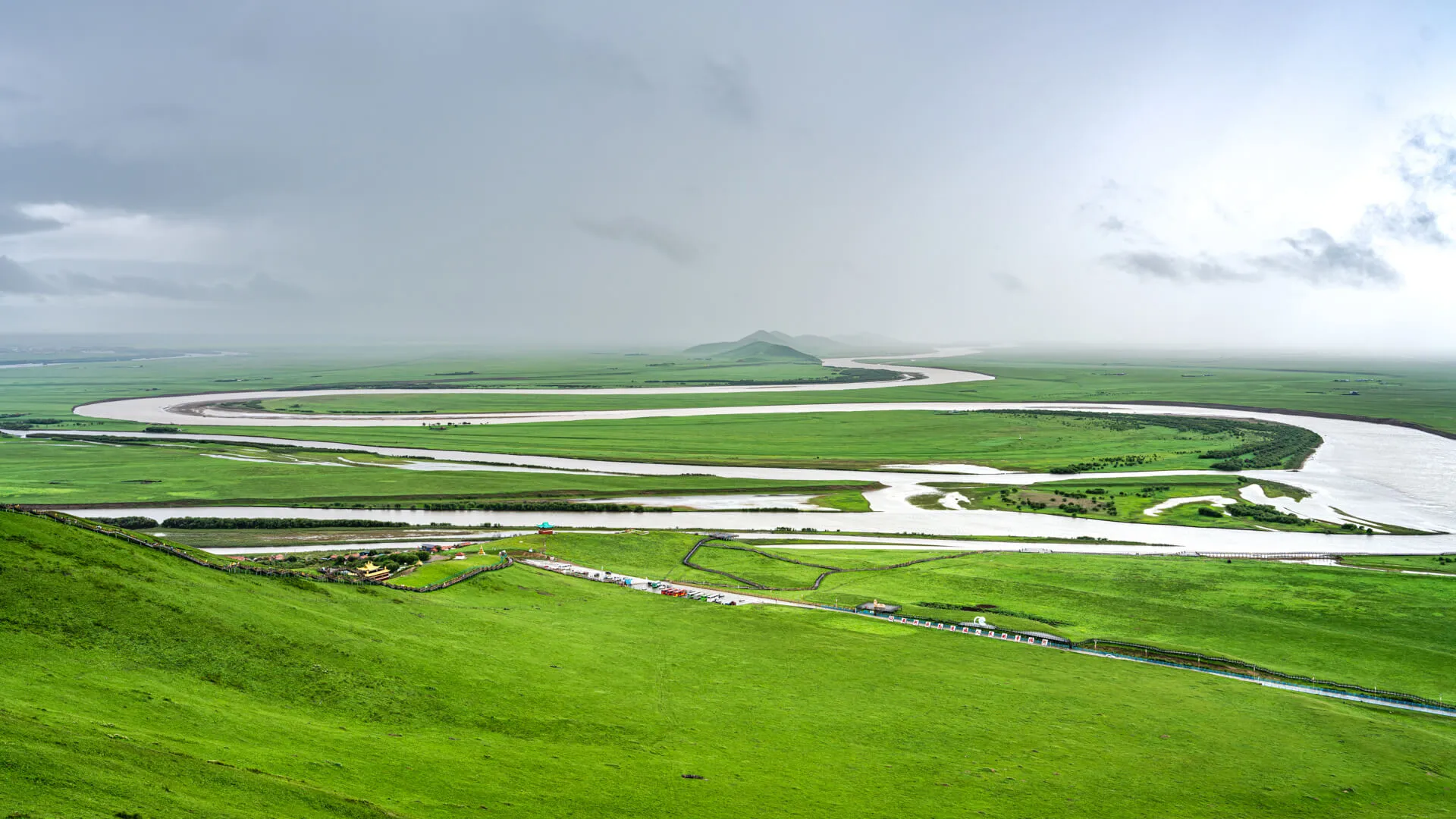
We reach Tangke before sunset for the first bend of the Yellow River. The whole valley goes gold, and the river loops through it like a line drawn by hand.

  • Zhagana sunrise
  • Huahu lake
  • First bend at sunset

Overnight Tangke

Morning mist lifting off the village and the limestone towers at Zhagana

Day 6Lianbao Yezhe – Aba

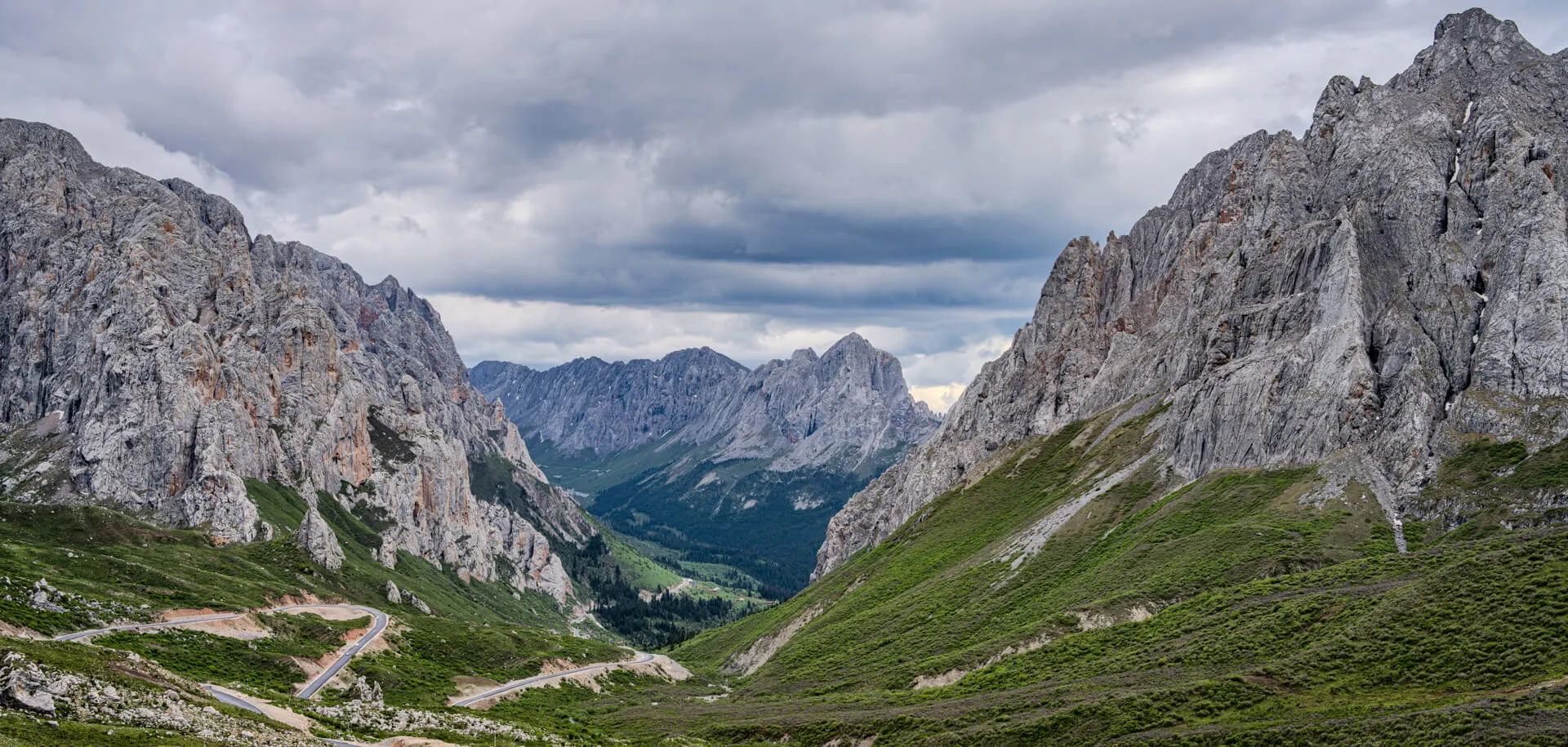
A day in the Lianbao Yezhe mountains: a short walk to the Hidden Lake, the summit platform for the wide view, and Zhaga’er Cuo, a lake lying under a wall of grey rock.

The rock here is bare and sharp, quite unlike the green pasture around it, and the weather changes fast enough to give you three different skies in an afternoon.

We finish at Baita Lake before sunset — water in front, the ridgeline behind, and the kind of stillness that only comes at four thousand metres.

  • Lianbao Yezhe
  • Hidden Lake
  • Baita Lake at sunset

Overnight Aba

A yak grazing on a green slope below a wall of limestone peaks

Day 7Hezuo

South to Hezuo, the prefecture town, and the Milarepa temple: nine storeys of chapels stacked around a central hall, filled with thangkas, statues and monks going about their day.

Photography inside is by permission and without flash. The courtyards, the outer circuit and the pilgrims coming and going are easier — and usually the better pictures.

The evening is free in town, which is a good place to eat and an easy place to walk.

  • Milarepa temple
  • Thangkas
  • Monks at work

Overnight Hezuo

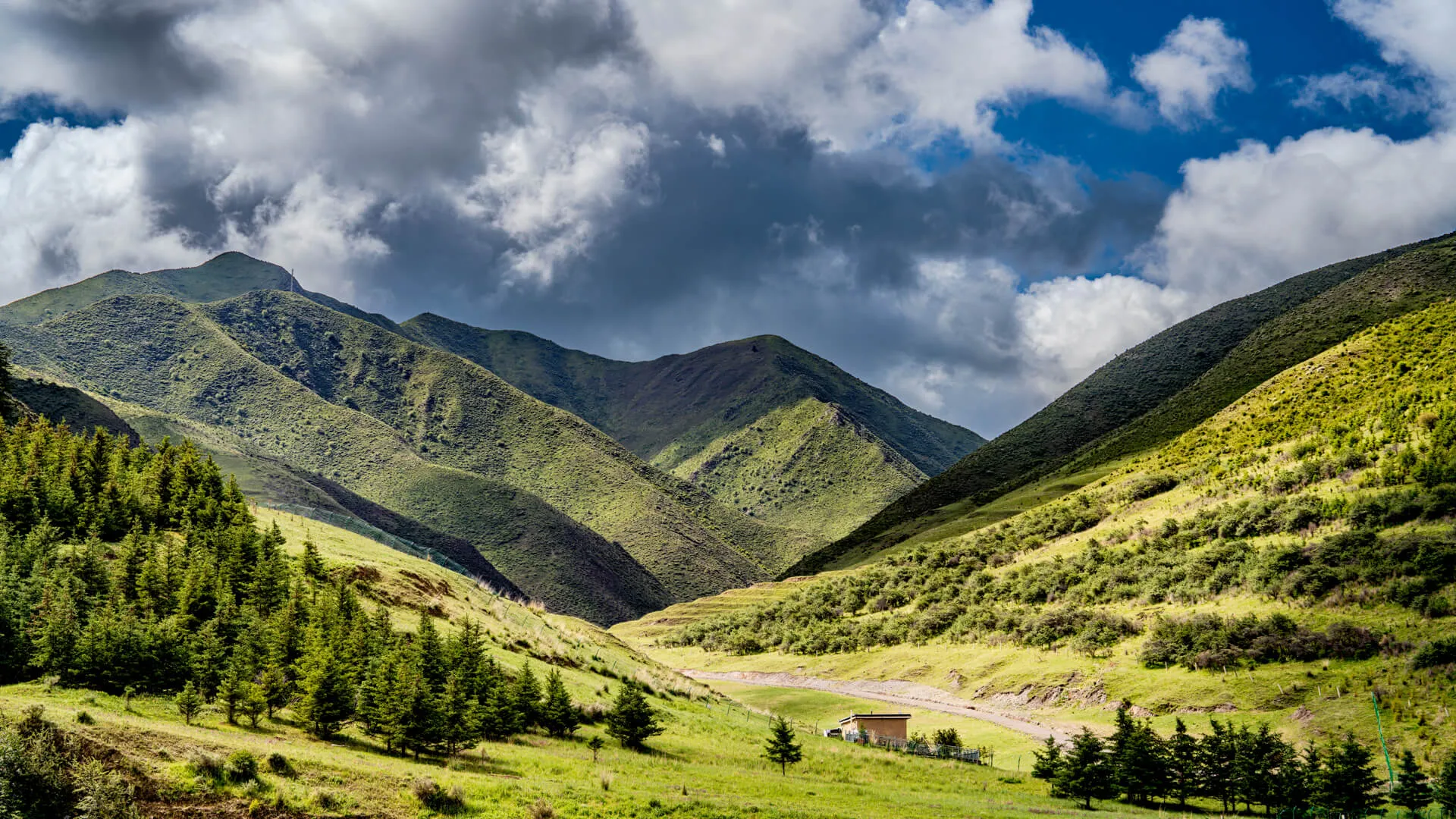
Green ridges and heavy cloud over a valley on the plateau

Day 8Back to Lanzhou

After breakfast, the three-hour drive back to Lanzhou, and the airport or the railway station in time for your flight or train.

If your departure is late, we can hold the morning for one last walk, or one more bowl of noodles.

  • Transfer to airport or station
Green ridges under heavy cloud on the drive back to Lanzhou

Trip Notes

What’s included?
  • Photography guide and a local expert at every location
  • Private van and driver for the whole loop
  • 7-night accommodation, the best available locally, single occupancy
  • Entrance fees to all photography locations
  • Personalised processing advice after the trip
  • Pick-up and drop-off at Lanzhou airport or railway station
What’s not included?
  • Arrival and departure flights or train tickets
  • Travel insurance
  • Meals (lunch and dinner)
  • Gratuity for the guide and driver, if you are happy with them
What does it cost?

USD 3,100 per person on single occupancy, or USD 2,400 if you share a room with a partner or a friend. A room to yourself is included at the single rate.

A non-refundable deposit of USD 1,000 reserves your place, and the balance is due 40 days before the tour begins.

How many people are in the group?

A maximum of 6 photographers, minimum 2. The roads here are narrow and the monasteries are busy, so a small group moves faster and gets closer to the people we photograph.

Can I fly a drone?

Partly. The grassland, the river bends and most of the open country around Zhagana are fine, and a drone is genuinely useful at Tangke and on the Zoige basin.

No flying at any monastery — Labrang, Langmusi, Binglingsi and the Milarepa temple are all off limits, and this is enforced. Registration of the aircraft is required in China before you fly; we can arrange it for you before you travel.

What gear should I bring?

Two bodies if you have them, one with a 24-70mm for the monasteries and the interiors, one with a 70-200mm for the pastures, the herds and the compressed layers of the valleys.

A fast prime is useful inside the temples, where the light is dim and flash is not allowed. Bring a tripod and a headlamp for the Zhagana sunrise, a polariser for the plateau sky, and more cards than you think you need.

Mornings are cold even in summer — a warm layer, gloves and a cloth for the condensation on the front element.

When is the best time to come?

The grassland is green from June to September, and that is when the monasteries are busiest with pilgrims and the high valleys are at their best. July and August bring the wildflowers and the most dramatic skies.

Late September and early October are drier and emptier, with the grass turning and the air very clear. Winter is cold and quiet, and the monasteries are at their most photogenic in snow — but some high roads close.

Booking & cancellation

A non-refundable deposit of USD 1,000 reserves your place; the balance is due 40 days before the tour begins and can be paid by PayPal, Alipay or WeChat.

If you find someone to take your place, we refund in full. Cancelling more than 30 days before departure returns 50% of the balance, 30 to 15 days returns 25%, and inside 15 days 10%. The deposit is retained in all cases.

“Each day was a phenomenal experience.”
Jonathan W. · TripAdvisor

Requesta quote.

Lanzhou to Zhagana in Eight Days

Inquiry Now
Inquiry Now