Trip Advisor Award
Skip to content
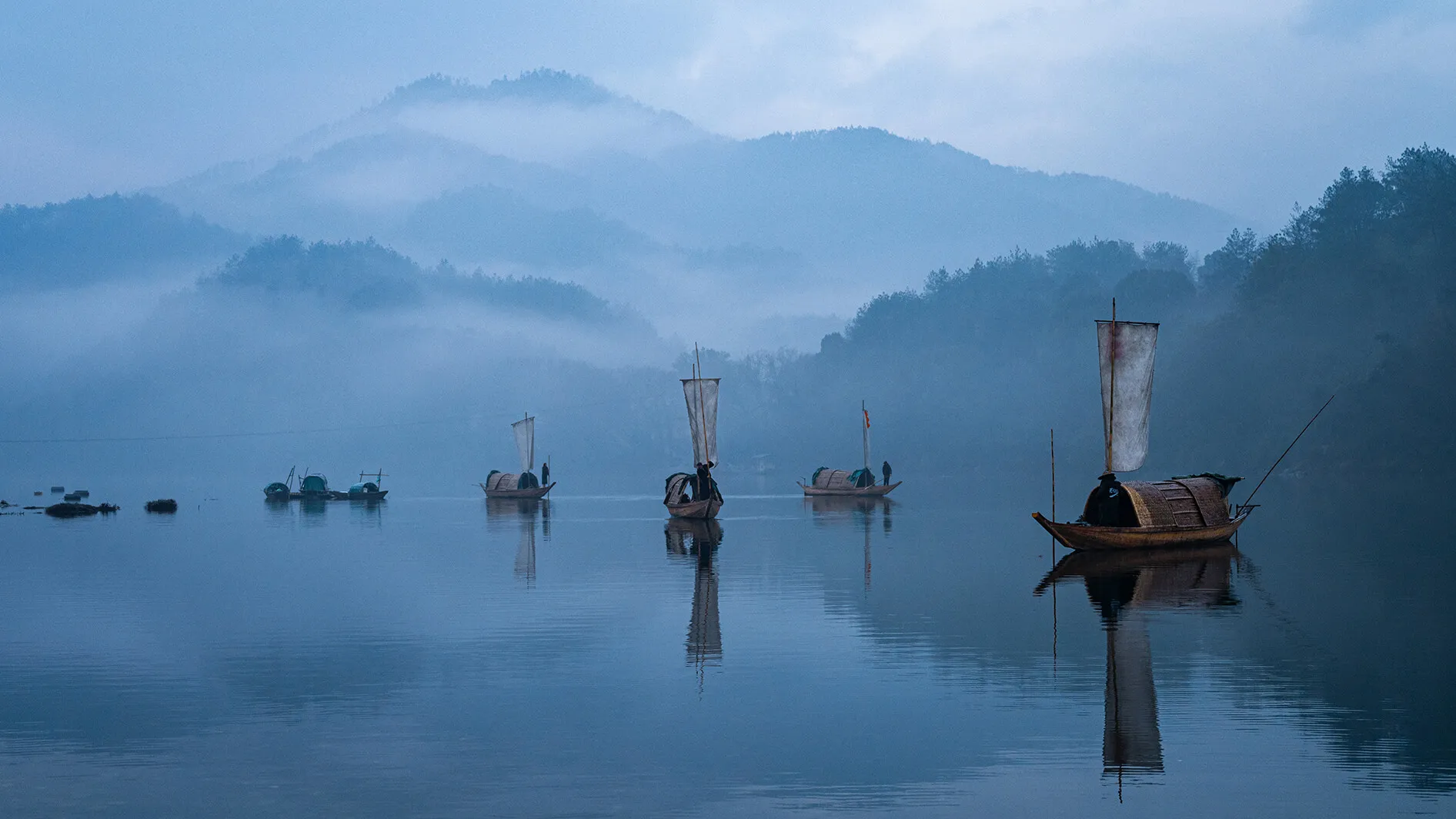
Wooden sailing boats with tall white sails on the misty Ou River at dawn

Xiapu and Lishui: Rivers & Sailing Boats

Seven days from the Fujian mudflats into Zhejiang — banyan trees, river mist and a fleet of sailing boats.

  1. Mudflats

    Xiapu

    Day 1 – 3

  2. Banyan trees

    Yangjiaxi

    Day 4

  3. River mist

    Nanxi River

    Day 5

  4. Sailing boats

    Ou River

    Day 6

  5. Stone bridge

    Xiandu

    Day 7

This seven-day tour runs from the tidal flats of Xiapu north into Zhejiang, along the rivers that once carried tea and porcelain out of the mountains. It begins with the landscapes that made Xiapu famous — bamboo poles, seaweed lines and a light that changes with every inch of the tide — then moves inland to the banyan trees, the She villages and the mist on the Nanxi River.

The last two days belong to water and boats: a fleet of wooden sailing boats on the Ou River at dawn, the old lanes of Heyang, and the stone bridge at Xiandu where a farmer walks his buffalo through the mist. Seven days, one road, and hardly two mornings that look alike.

Inquiry Now Mercier Zeng will reply to you directly within a few hours.

Itinerary

Day 1Arrival in Xiapu

Xiapu is reached by high-speed train from Fuzhou or Xiamen, both of which have international flight connections. If you fly into Fuzhou, we can arrange a private car to meet you at the airport.

We pick you up at Xiapu railway station and take you to the hotel for a welcome dinner with your guide and the rest of the group.

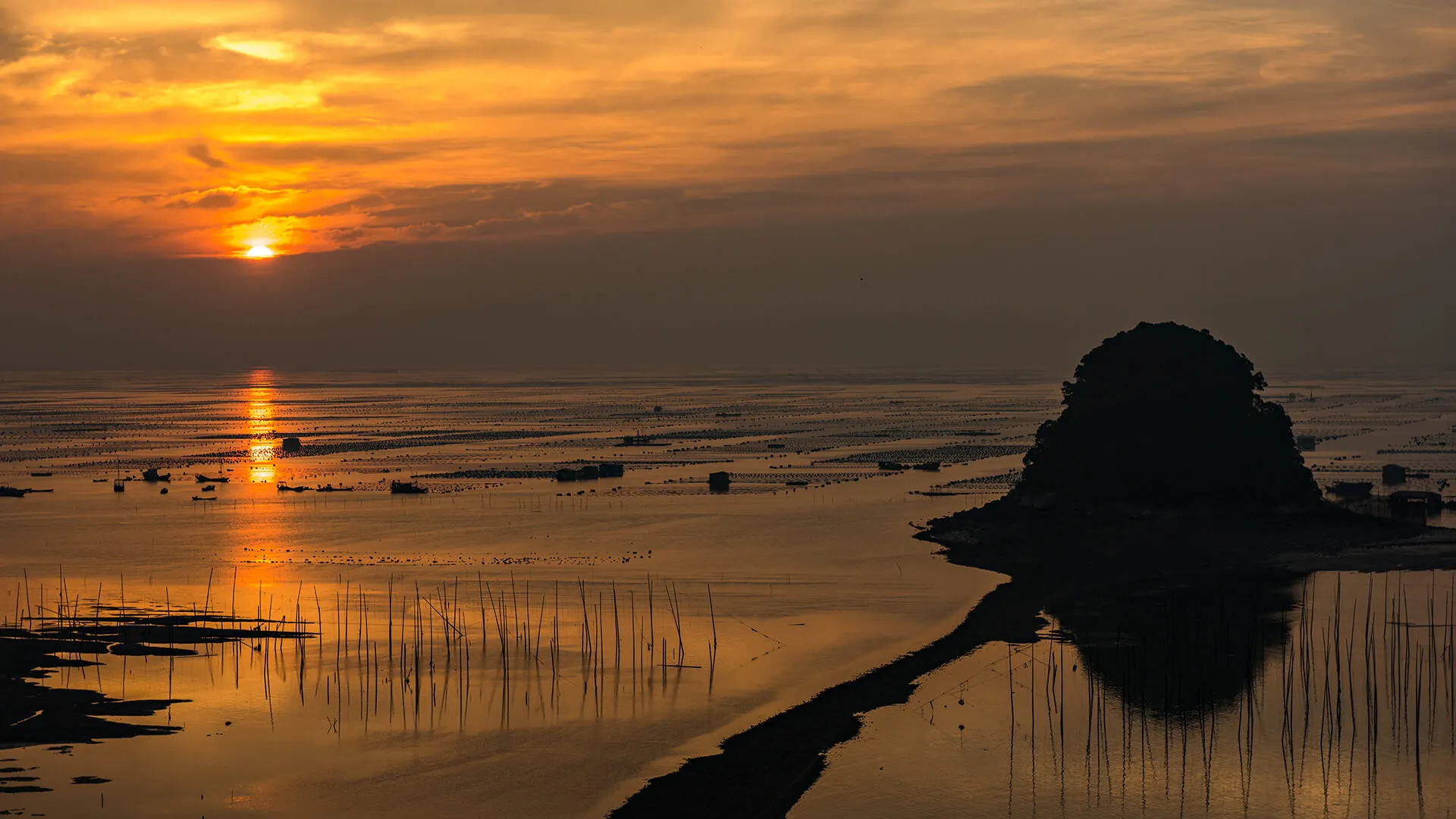
If you land early enough there is still time to see the sun go down over the mudflat — the tide decides which spot we use.

  • Railway station pick-up
  • Welcome dinner
  • Sunset over the mudflat

Overnight Xiapu
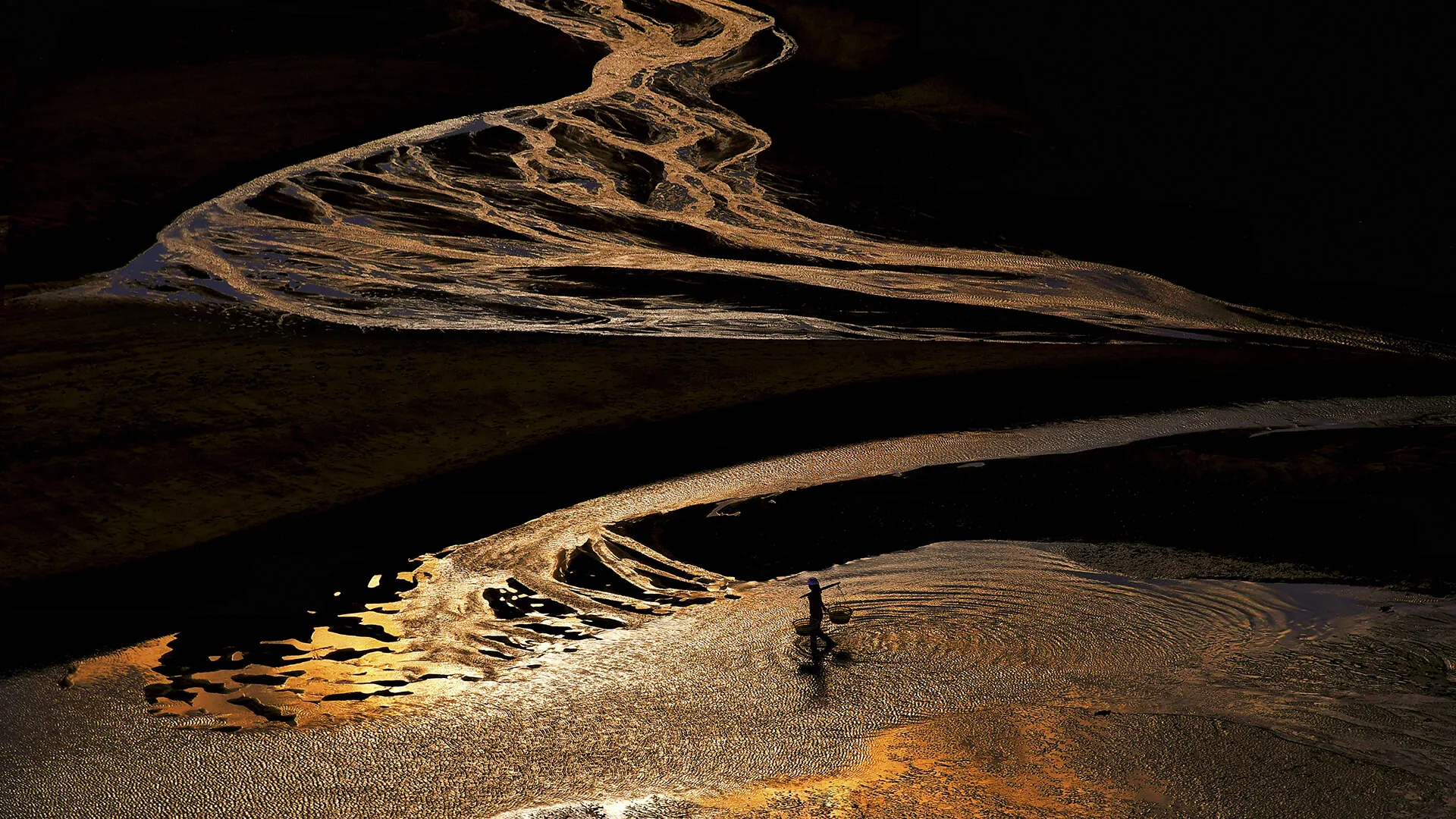
Tidal channels cut into the mudflat at Xiapu, seen from above

Day 2Mantou Hill & the Ancestral Temple

We leave before dawn for Mantou Hill, where the sun comes up over a golden mudflat stitched with hundreds of bamboo poles, each of them carrying its crop of drying seaweed. As the tide creeps back in, the whole pattern is drawn again.

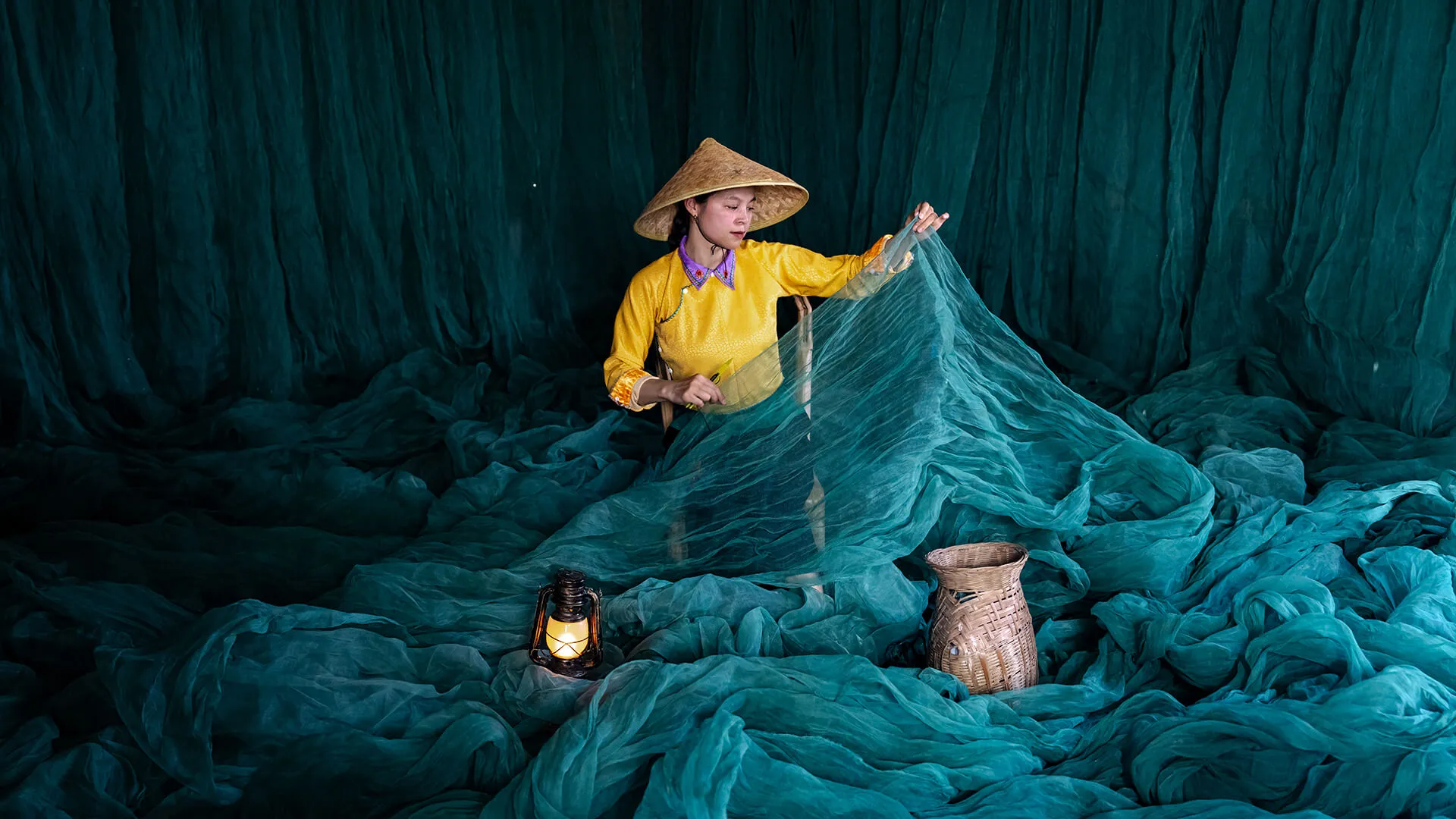
After breakfast, a hidden ancestral temple in a nearby village, where a woman sits mending nets. The light comes through the half-closed doors and lays a soft band across the work.

In the afternoon, the S-curve: bamboo poles and crab nets drawn across the channels of the seaweed harvest, with boats crossing and recrossing the frame until the light goes.

  • Mantou Hill sunrise
  • Seaweed poles
  • Ancestral temple
  • The S-curve

Overnight Xiapu

Sunrise over the mudflat and its bamboo poles, seen from the top of Mantou Hill

Day 3Xia Qing Shan, Mangroves & Floating Nets

Forty minutes out of town by first light, the bridge at Xia Qing Shan, where the fishermen haul in the nets and the fish they set the day before.

Then the mangrove forest, where a fishing couple work the channels between the trees — simple lines and clean frames, the kind of scene that asks to be photographed in black and white.

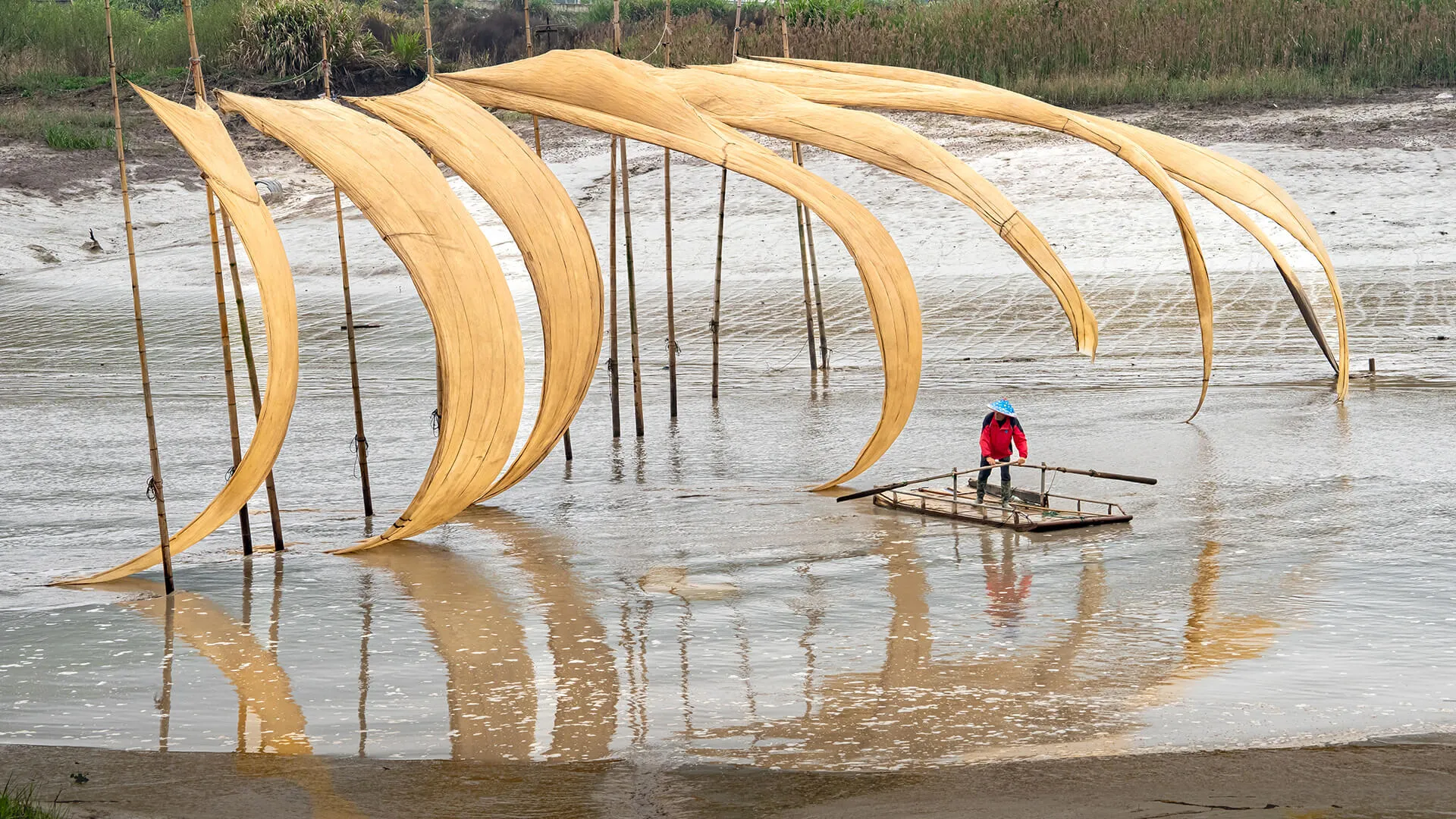
In the afternoon, the floating nets in the low-tide flats: shrimp nets strung between poles, moving with the wind, with a single man on a bamboo raft working between them.

We finish with the fishermen walking home across the mudflat at sunset, one of the set pieces of Xiapu.

  • Xia Qing Shan
  • Mangroves
  • Floating nets
  • Fishermen at sunset

Overnight Xiapu

Arc-shaped shrimp nets strung between poles on the mudflat

Day 4Banyan Trees, a She Village & the Nanxi River

Yangjiaxi in the morning: a farmer couple walk their buffalo under the giant banyan trees while the sun comes through the branches in visible rays.

Next, a She minority village, where the old houses are still lived in. A girl weaves at the family loom and a grandmother of eighty-odd cooks over the traditional hearth — both portraits are made in whatever light the house gives us.

In the afternoon we drive north into Zhejiang and stay the night on the Nanxi River.

  • Yangjiaxi banyans
  • Buffalo farmer
  • She village portraits
  • Drive to the Nanxi River

Overnight Nanxi River

A farmer leading his buffalo under the banyan trees at Yangjiaxi

Day 5The Nanxi River

Morning mist on the river, and the fishermen who work it: casting a net from a bamboo raft, drawing it back in, and doing it again until the light lifts off the water.

In the afternoon, portraits of the buffalo farmers of Yangjiatang, one of the old villages above the valley, where the lanes and the courtyards have barely changed.

Late in the day we move on to the Ou River and stay overnight there.

  • River mist
  • Net casting
  • Yangjiatang village
  • Drive to the Ou River

Overnight Ou River

Fishermen working the river at sunrise, nets in silhouette

Day 6The Ou River & Heyang

Dawn on the Ou River, where the small wooden boats raise their tall white sails and the whole fleet is doubled in the still water.

Then Heyang, an old residential quarter of narrow lanes and grey-brick courtyards, where we photograph the houses and the people who still live in them, and make portraits in the doorways.

In the late afternoon we drive to the Xiandu scenic area and stay overnight.

  • Sailing boats at dawn
  • Heyang old houses
  • Street portraits
  • Xiandu

Overnight Xiandu

A farmer leading his buffalo past a vine-covered house in an old village

Day 7Xiandu & Departure

An early start for the picture the whole week has been building towards: a buffalo farmer couple crossing the old stone bridge in the mist, with the rock pillar of Xiandu standing behind them.

After the session we go back to the hotel for a shower and a rest, then drive you to Wenzhou airport for your flight home.

If your flight leaves late in the day, we can add a last stop on the way.

  • Stone bridge at dawn
  • Xiandu rock pillar
  • Transfer to Wenzhou airport
A farmer and his buffalo crossing the stone bridge at Xiandu in the morning mist

Trip Notes

What’s included?
  • Photography guide and a local expert at every location
  • Private van and driver
  • 6-night accommodation in the best local hotels, single occupancy
  • Entrance fees to all photography locations
  • Expenses for people photography, buffalo farmers and family visits
  • Pick-up at Xiapu railway station and drop-off at Wenzhou airport
  • Personalised processing advice after the trip
What’s not included?
  • Arrival and departure flights or train tickets
  • Travel insurance
  • Meals (lunch and dinner)
  • Gratuity for the guide and driver, if you are happy with them
What does it cost?

USD 2,800 per person, based on single occupancy — a room to yourself is included in the price.

Couples or friends sharing a room pay USD 700 less each. A deposit of USD 1,000 secures the place, with the balance due before departure.

How many people are in the group?

A maximum of 6 photographers, minimum 3. Small enough to work inside a village house without getting in each other’s way.

What gear should I bring?

Two cameras: one body with a wide angle, one with a zoom. A 24-70mm and a 100-400mm will cover nearly everything here — the 70-200mm is a little short for the fishermen on the mudflat and the sails on the Ou River.

A tripod is essential for the low light on the river and the bridge at Xiandu, and a head torch is worth having for the early starts. A polarizer is optional; it helps on the water in the middle of the day.

Bring a cloth bag or a rain cover: mudflat mornings mean spray and fine sand.

When is the best time to come?

The coast and the rivers can be photographed all year. The seaweed harvest runs in spring and autumn, the banyan trees keep their leaves in every season, and the mist on the Nanxi River is most reliable in the cooler months.

Tell us when you can travel and we will build the itinerary around the tides and what is happening in the fields at that moment.

Booking & cancellation

A non-refundable deposit of USD 1,000 reserves your place; the balance is due 40 days before the tour begins.

If you find someone to take your place, we refund in full. Cancelling more than 30 days before departure returns 50% of the balance, 30 to 15 days returns 25%, and inside 15 days 10%. The deposit is retained in all cases.

“Each day was a phenomenal experience.”
Jonathan W. · TripAdvisor

Requesta quote.

Xiapu to Lishui in Seven Days

Inquiry Now
Inquiry Now